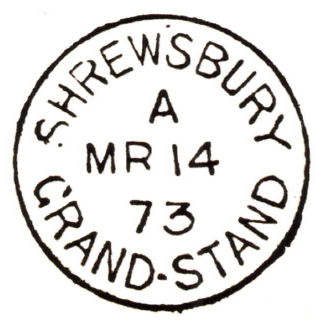
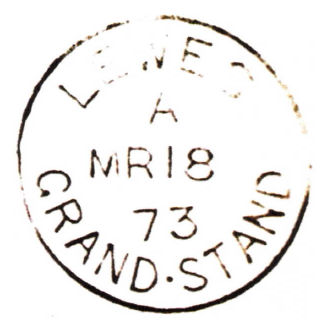
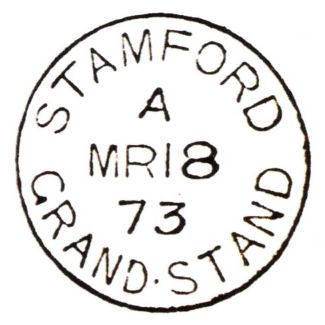
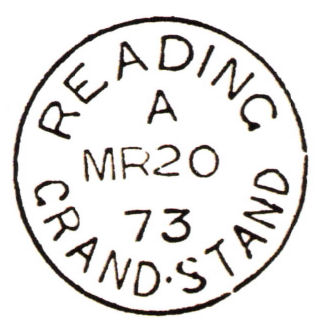
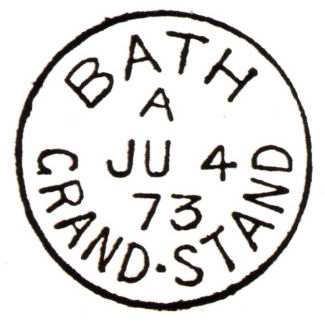
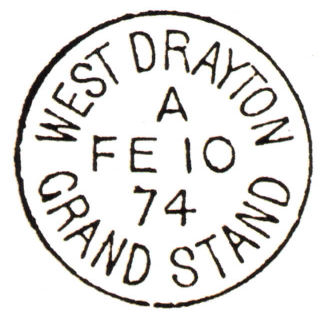
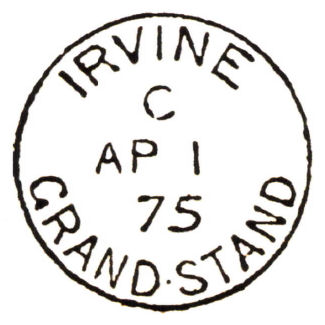
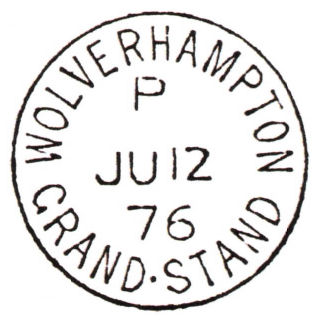
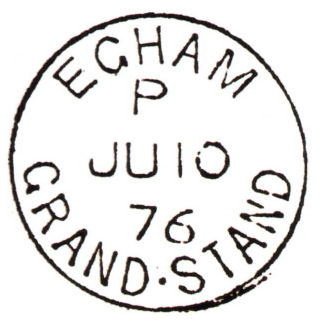
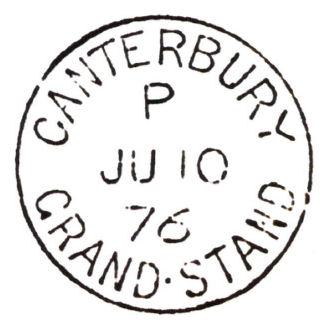
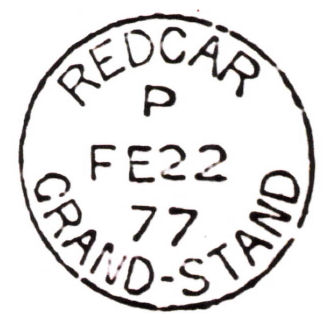
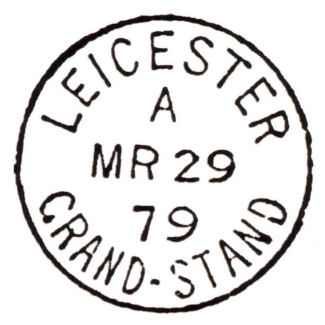
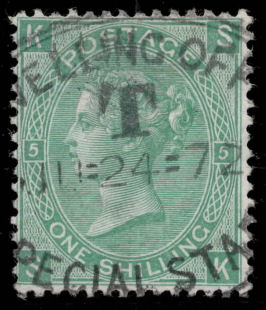
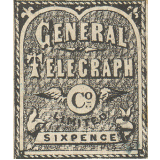
 |
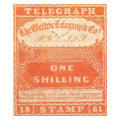
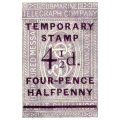
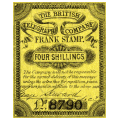
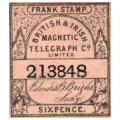
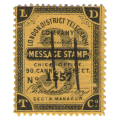
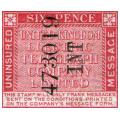
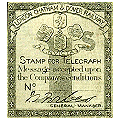
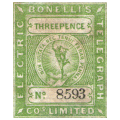
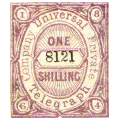
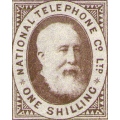
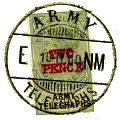
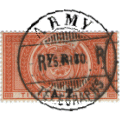
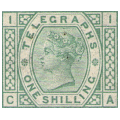
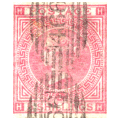
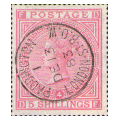
Telegraph stamps of Great Britain.
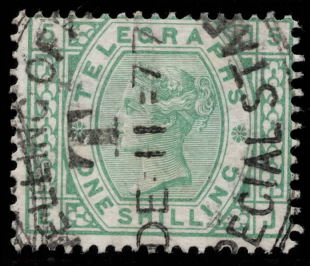
Until recently, only the Post Office telegraphs were well known.
This is changing but the printed information is still out of date.
I hope to gather further information and present it here.
This site has been expanding. Click here for a site-map. |
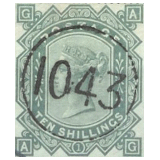 |
| Übersetzen sie |
WORKING
|
Traduisez |
| Traduca |
Traduzca |

Special Events Cancellations.
(These were mostly for Horse Racing events.)
With permission, this is adapted from an exhibit by Dr. Ian Pinwill FRPSL.
There is some duplication with other pages.
Introduction.
After the nationalisation of the telegraph system by the Post Office in 1870, it was noted that a large and lucrative portion of
business was to be had in servicing race meetings and special events. This had been exploited by the private companies to a
limited extent, but the volume of the business and the need for temporary telegraph offices meant that a significant amount of
skill and expertise was required for the operation. To this end, the Central Telegraph Office set-up a specialist department headed
by Mr. Johnston in 1870, employing some 20 odd skilled telegraphers under the auspices of the ‘Special Staff. Major race
meeting venues that had temporary wired telegraph offices incorporated imto the grand-stand buildings were issued with circular
date stamps from the inception of the GPO telegraph system in 1870, including Doncaster, Epsom and Newmarket. Others such
as Stockbridge, Chester and Ascot followed a year later but from 1872, after the introduction of the horse-drawn mobile
telegraph office by the Special Staff, all significant race meetings were able to be serviced.
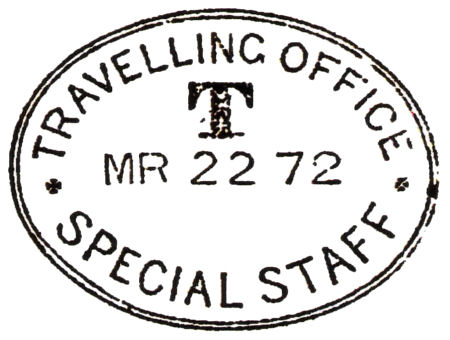
On March 22 1872, two oval cancellers of the above design were proofed for use in the travelling telegraph office and they first saw use at the Boat Race that year.
The events attended by the Special Staff were published monthly in the Post Office Circulars and from these it is possible to allocate the date of each usage of this cancel to a specific event.
From 1873, most race meetings were provided with their own circular date stamps, some to temporary offices but by far the
majority went to Mr. Johnston’s department for use in the travelling office.
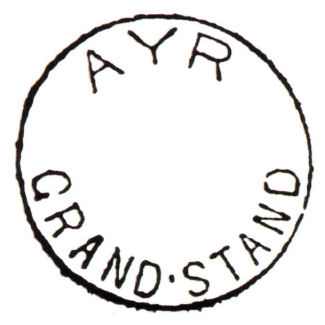
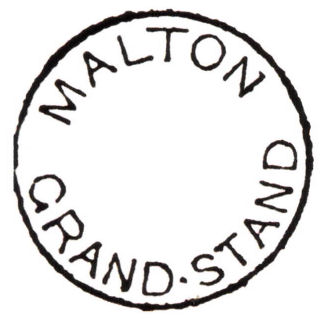
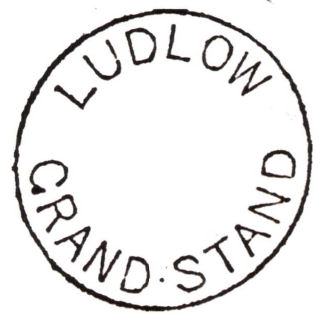
In total, 69 different grand-stands were supplied of
which surviving used examples are scarce to rare for several offices, a few are unique used examples and about half are yet to be
found!
Aintree Grand-Stand:
Aintree received two 24mm steel date stamps. The first was proofed on the 13 April 1873 and was sent directly to Mr. Johnston.
This has the format: AINTREE / GRAND-STAND. Business was huge with 27750 telegrams over three meetings in 1875.
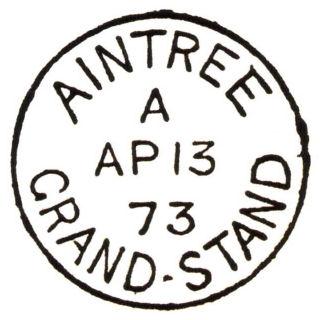


Examples from the 16/17 July 1878 and 21 July 1891 race meetings.
The second was proofed on the 11th January 1877 and was sent to Liverpool. This has the format: GRAND-STAND / AINTREE.
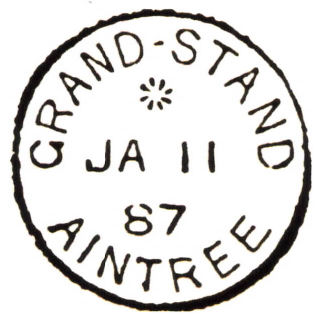
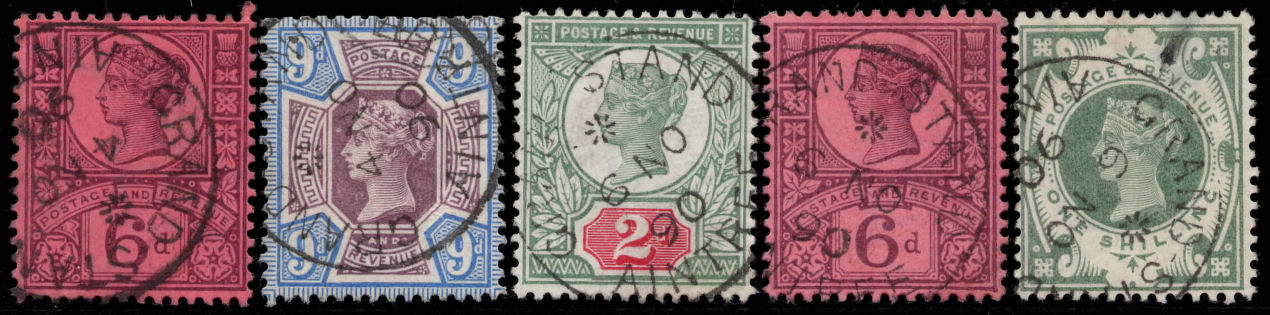
Examples from the 4/6 November 1890 race meeting.
 |
 |


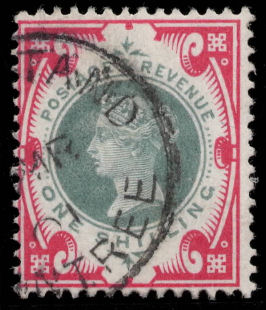
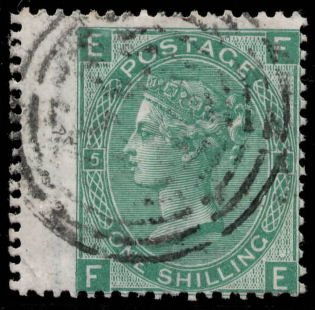 |
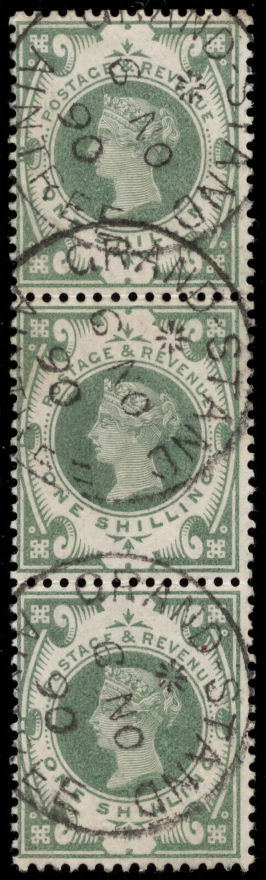
Further examples from the 4/6 November 1890 race meeting and examples
for the 22 March 1888 and March 1901 meetings. The latter two being the Grand National.
Between Feb 1870 and April 1873, Aintree did not have a dedicated handstamp
yet there was a telegraph office present at race meetings.
The existence of many used examples of the seven concentric ring cancel on stamps
of this period, formerly used in Liverpool by the "Bntish and Irish" and the
“Electric Telegraph" companies, was almost certainly the cancel selected
and used at the
temporary Aintree grand-stand by the Special Staff during this period. |
Post Office Circulars.
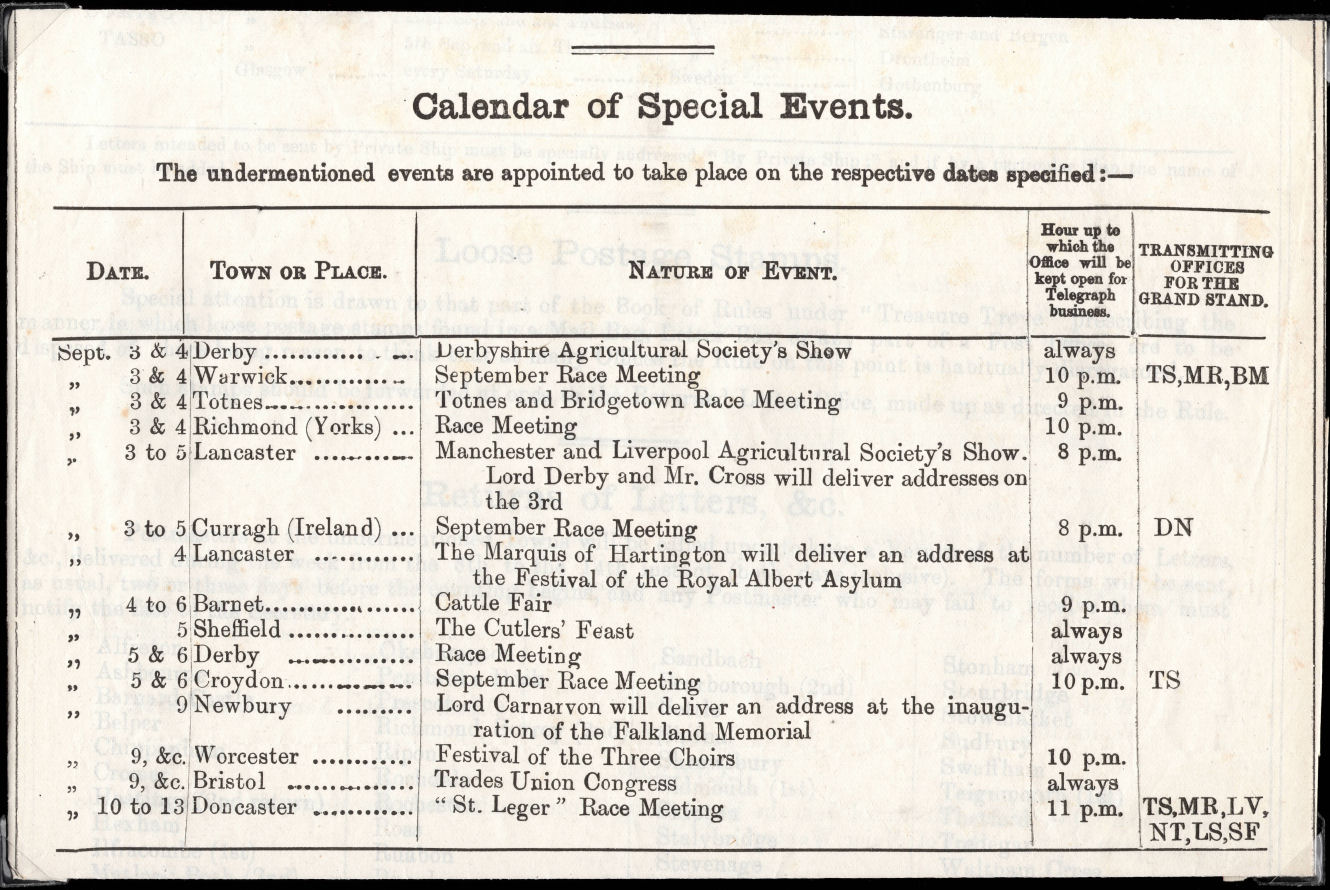
The Post Office Circulars of the time published important information relating to telegraphic business. This included a calendar
of special events that listed all the occasions that would be attended by the Special Staff and gives information relating to
operating hours and transmitting offices. These provide the information required to positively identify the event at which a
specific cancellation was used; those being attended by the Special Staff having the code TS.
From the Post Office Circular for Monday, September 2, 1878.
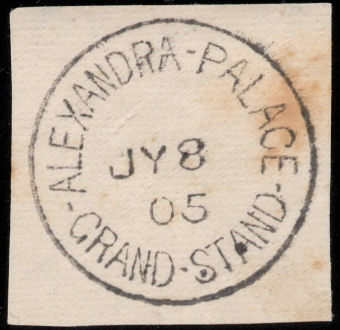
Alexandra Park/ Palace Grand-Stand:
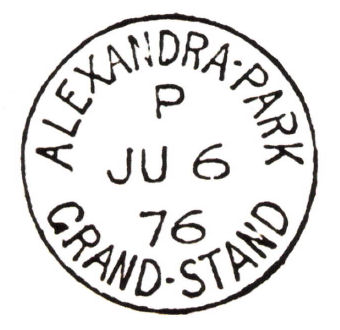
Alexandra Park received one 24mm steel date stamp, which was proofed on the 6th June 1876 and sent to the Central Telegraph
Office Special Staff. This has the format. ALEXANDRA PARK / GRAND-STAND. However, at some point this was changed
to ALEXANDRA PALACE / GRANDSTAND.
 |
Telegraph form cancel cut-out for the meeting of 8 July 1905 used with the Alexandra Palace Grand-Stand handstamp. |
 |
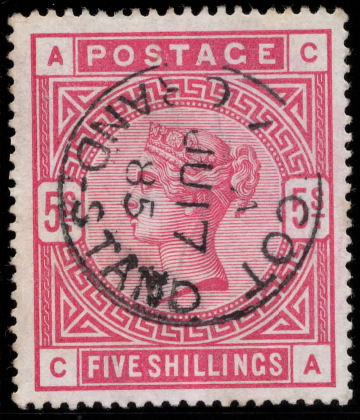
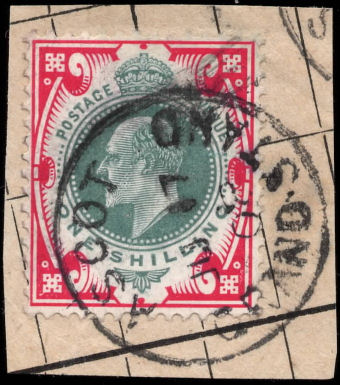
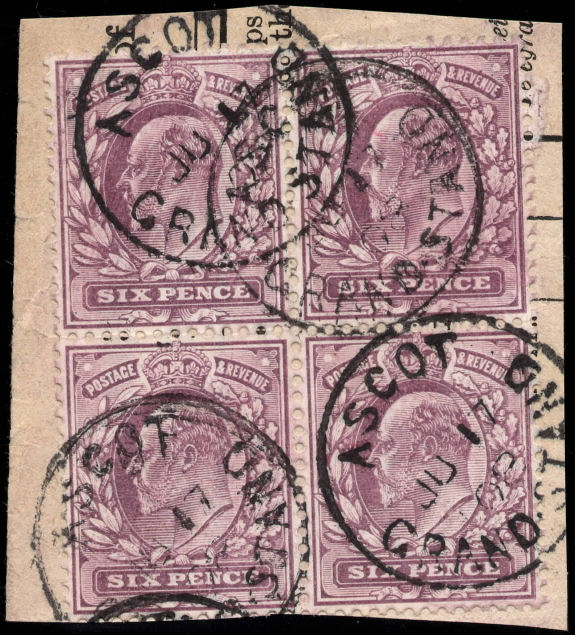
Ascot Grand-Stand:
Ascot only received one 22mm steel date stamp which was proofed on the 1st June 1871 and was sent to one W. G. Lyster Esq.
This has the format: ASCOT / GRAND-STAND. In one meeting 14527 telegrams were sent.
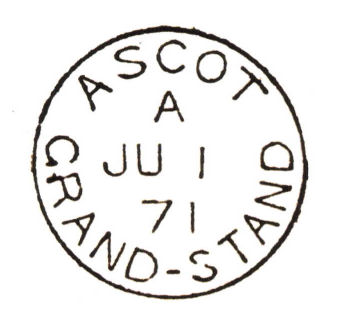
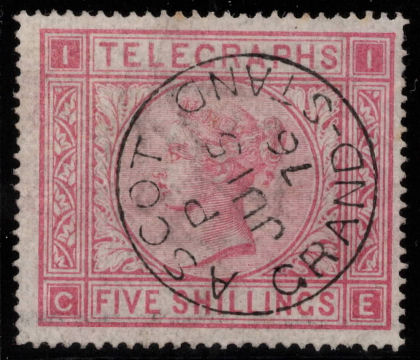
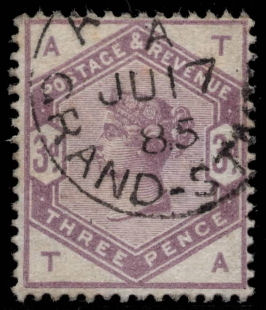
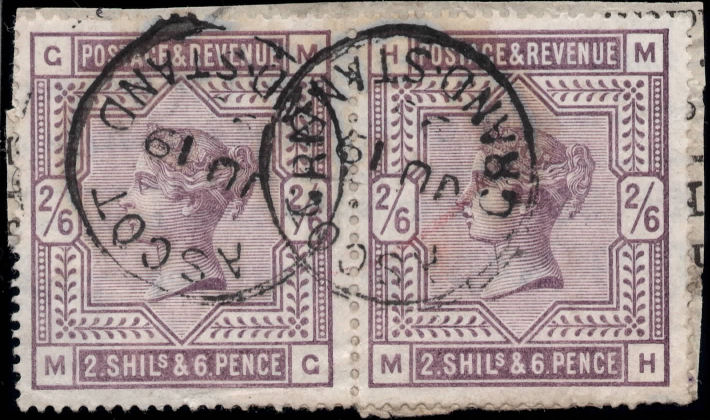
Examples from the 15 June 1876, 17 June 1885, 19 June 189? and 17 June 1908 race meetings. The June meetings being the Gold Cup.
Aylesbury Grand-Stand:
Aylesbury received one 22mm steel date stamp which was proofed on the 18th February
1874 and was sent to Mr. Johnston of the Special Staff.
This has the format:
AYLESBURY / GRAND-STAND.
 |
Small piece of telegraph form used 19 March 1914 with the
Aylesbury grand-stand date stamp. Numbers of telegrams were
minimal compared to the large meetings. |
 |
Brighton Grand-Stand:
Brighton received one 25mm steel date stamp in Victorian times which was proofed on the 10th August 1875 and was sent to Mr. Johnston.
This has the format: GRAND-STAND / BRIGHTON. A second date stamp was obviously issued at some time in the
early 20th Century
as the format GRAND STAND / BRIGHTON SUSSEX also exists. 9738 telegrams were sent for one meeting in 1875.
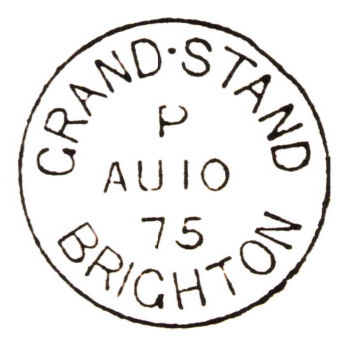
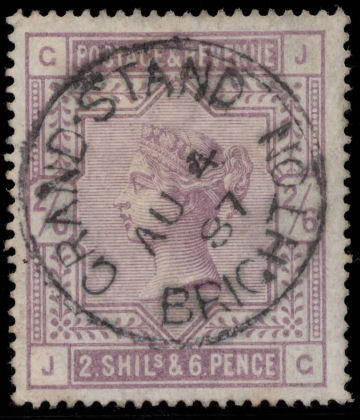
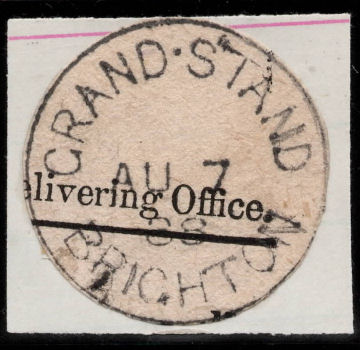

Examples from the 4 August 1887, 7 August 1888 and 27 June 1928 race meetings (the latter two cut-outs on pieces of telegraph form)
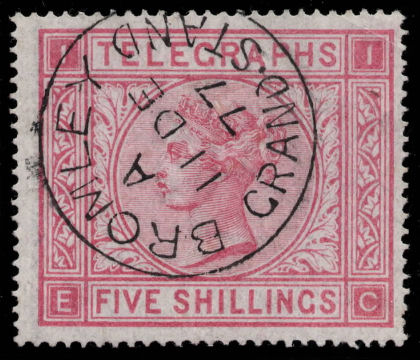
Bromley Grand-Stand:
Bromley received one 23mm steel date stamp which was proofed on the 20th March 1873 and was sent to Mr. Johnston at the
Central Telegraph Office.
This has the format: BROMLEY / GRAND-STAND.
 |
Example used on 11 DE 1877 with the Bromley date stamp.
Telegrams from this race meeting would have only numbered in the hundreds. |
 |
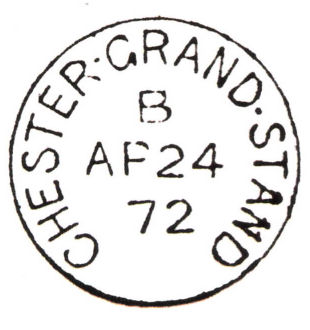
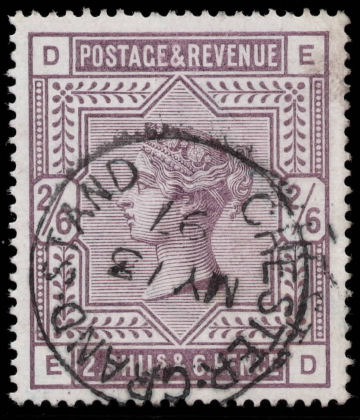
Chester Grand-Stand:
Chester received one 23.5mm steel date stamp which was proofed on the 24th April 1872 and sent direct to Chester.
This has the format: CHESTER GRAND-STAND.
 |
Example used on the 13 May 1897 race meeting. |
 |
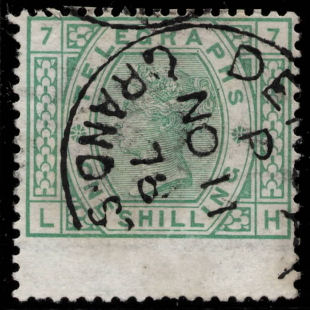
Derby Grand-Stand:
Derby received two 24mm steel date stamps, the first of which was proofed on the 19 March 1873 and sent to Mr. Johnston.
The second is dated 10 December 1883. Both have the format: DERBY / GRAND-STAND. The number of telegrams sent
each meeting were in the low thousands in the 1870’s.
 |
Examples used at race
meetings on 11 November 1878
and 12 July 1881. |
 |
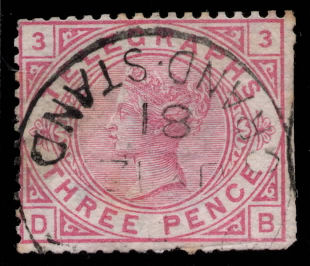 |
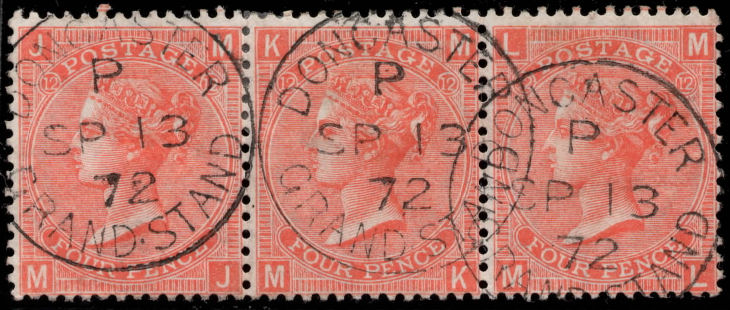
Doncaster Grand-Stand:
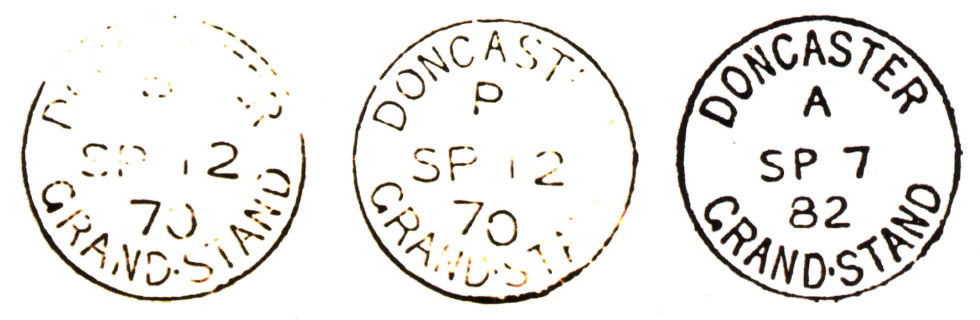
Doncaster received no less than three 23mm steel date stamps in Victorian times. The first two were proofed on the 12th September 1870.
These have the format. DONCASTER / GRAND-STAND and the two are distinguishable by an offset in the date.
A third date stamp was proofed on the 7th September 1882 and is of the same format but has a slightly narrower script.
All were sent to Doncaster Telegraph Office
 |
 |

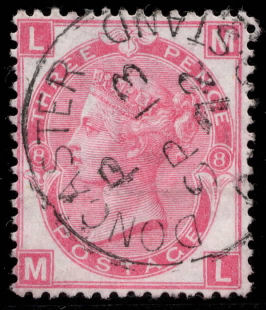
Example used at the St. Ledger
meeting dated 9 September 1891
with the third type handstamp. |
 |
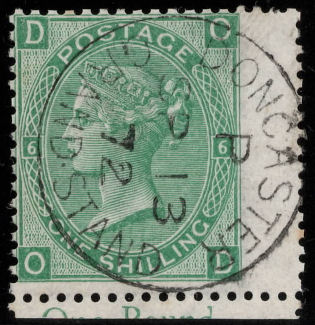 |
Examples used at the St. Leger race
meeting on 13 September 1872 with the
first type handstamp.
Doncaster was the
third largest event after Newmarket and
Aintree as far as telegram receipts were
concerned, with 20911 telegrams sent in
just two annual meetings in the 1870's. |
 |
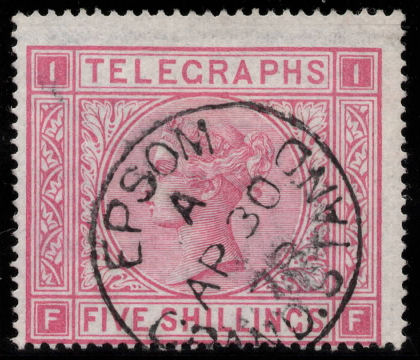
Epsom Grand-Stand:
Epsom received one 23mm steel date stamp which was proofed on the 7th April 1870 and sent
directly to Epsom.
This has the format: EPSOM / GRAND-STAND.
 |
Example used at the race meeting on 30 April 1878 with the Epsom date stamp.
This was the spring meeting, the autumn Derby was the most attended sporting event in Victorian England and between the two meets some 19573 telegrams were sent in 1875. |
 |
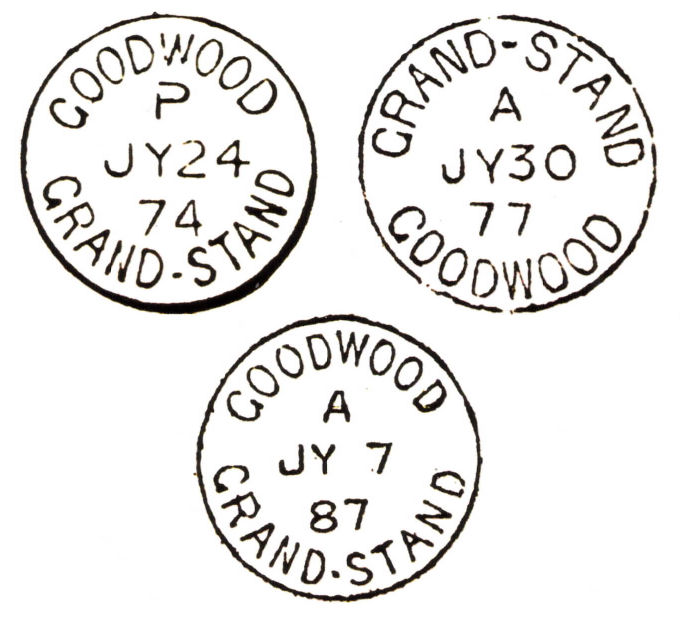
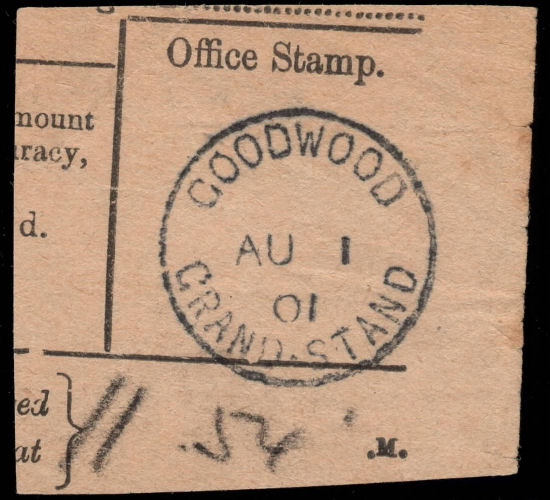
Goodwood Grand-Stand:
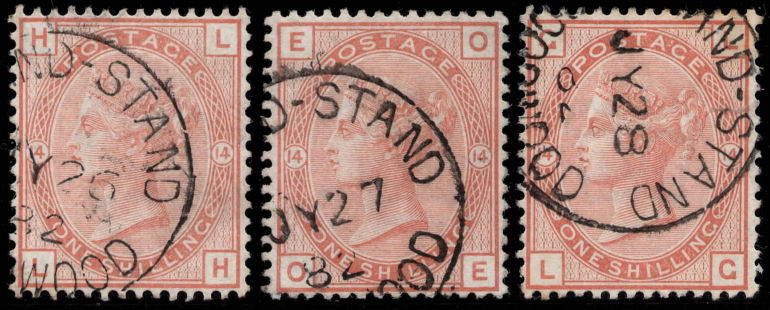
Goodwood received three steel date stamps in Victorian times. The first was 24mm and proofed on the 24th July 1874.
This has
the format! GOODWOOD / GRAND-STAND.
The second, also 24mm, was proofed on the 30th July 1877 and is of the
format GRAND-STAND / GOODWOOD.
The third, 23mm in diameter, reverted to the initial format and was proofed on the
7th July 1887. All three were sent directly to Chichester.
 |
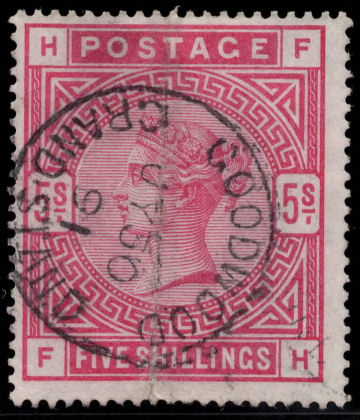 |
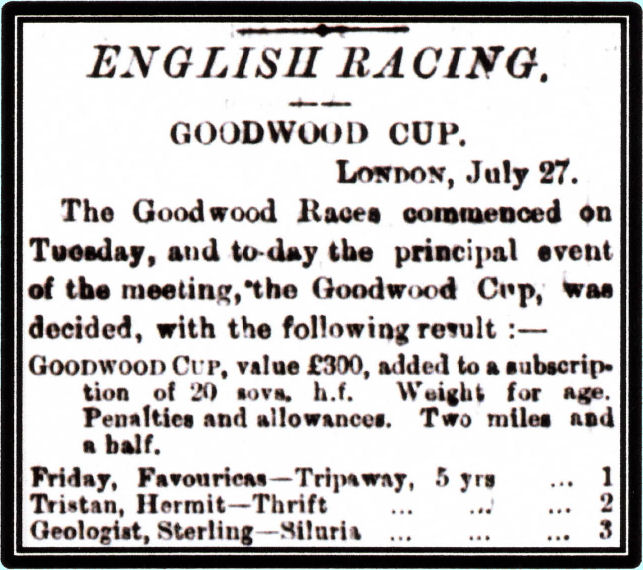
Stamps used at the Goodwood Cup meeting
of 26/28 July 1882 with the Goodwood second issue date stamp.
The results of this race were published the same day in a
Launceston, Tasmania newspaper (right).
Only achievable due to the telegraph service and the efforts of the Special Staff.
Also an example dated 30 July 1891 with the third issue handstamp and a small piece dated 1 August 1901 (on piece of form) with the same Cancel.
Goodwood was the sixth largest meeting in terms of telegrams sent with 16279 at just one meeting in 1875. |
 |
Harpenden Grand-Stand:
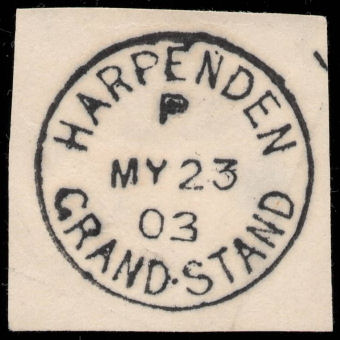
Harpenden received one 23mm steel date stamp, which was proofed on the 21st April 1881 and sent to St Albans.
This has the format. HARPENDEN / GRAND-STAND.
 |
Telegraph form cancel cut-out for the meet of 23 May 1903 used with
the Harpenden Grand-Stand handstamp.
|
 |
Huntingdon Grand-Stand:
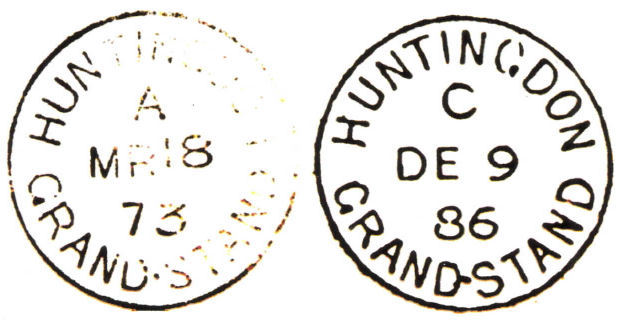
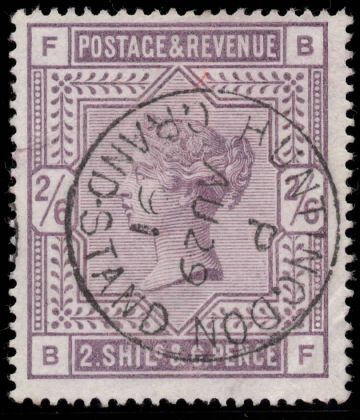
Huntingdon received two 23mm steel date stamps. The first was proofed on the
18th March 1873 and was sent directly to Mr. Johnston of the Special Staff.
This has the format: HUNTINGDON / GRAND-STAND. The second was proofed on the
9th December 1886.
 |
Example used at the race meeting of 29 August 1891
with the first issue Huntingdon date stamp. |
 |
Kelso Grand-Stand:
 |
|
There is no proof for a Kelso cancel and it is not known if a specific circular date
stamp was ever issued to this grandstand. This reconstructed irregular block of 3,
dated 1 October 1872, with the Travelling Office oval, can be shown from the
Post Office Circular of that month to have been used at the race meeting in Kelso
on that date, the travelling office being shown to be in attendance.
|
Kempton Park Grand-Stand:
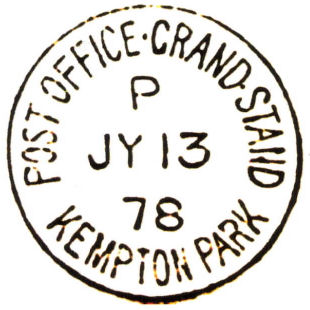
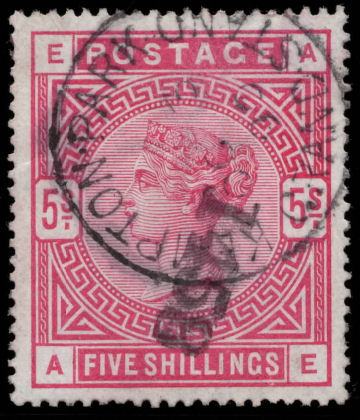
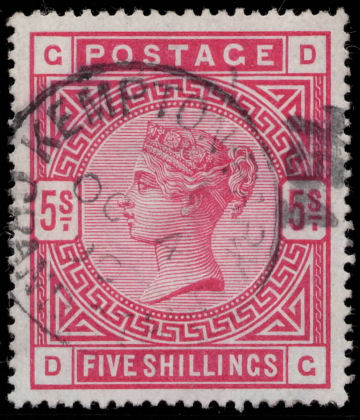
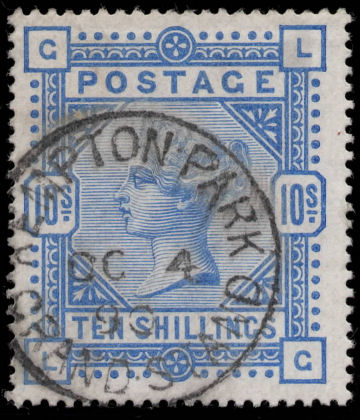
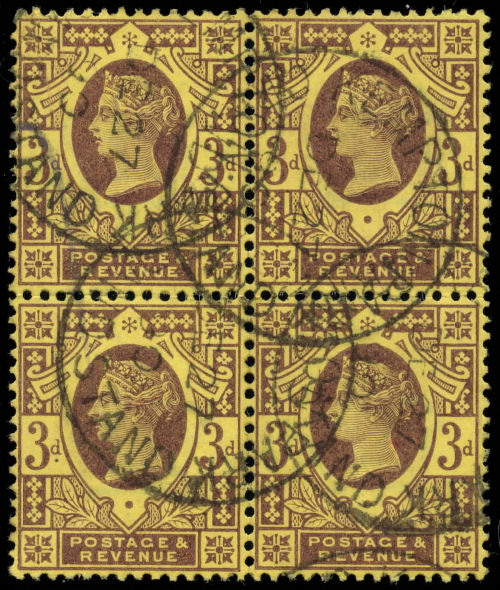
Kempton Park received two steel date stamps. The first was proofed on the 13th July 1878 and is 24mm in diameter.
This has the format: POST OFFICE GRAND-STAND / KEMPTON PARK and interestingly it was sent to the Secretary's Office, GPO, examples of it used are known.
The second date stamp, 25mm in diameter, was proofed on the 21st July 1889 and is of the format KEMPTON PARK / GRAND-STAND.
 |
Stamps used at the Kempton Park meeting of 3/4 July 1890 and 27 December 1890, both with the second issue date stamp . |
 |
 |
 |
 |
Both 5/- values show a hand stamped accounting number (754 and 1458).
This was a methodology introduced by the Special Staff to increase throughput efficiency
at busy race meetings. Writing individual receipts and copies for multiple identical
telegrams, such as results, was laborious and time consuming. So, where a receipt or copy was
required just a number was used and the receipt and original form stamped accordingly. This
would mostly have been used for press telegrams. These also give a good indication
of the large numbers of telegrams being handled on a daily basis by these temporary offices.
It is worth noting that in 1875, across 150 meetings, a total of 414,814 telegrams
were sent, making this a very lucrative business for the fledgling Post Office
Telegraphs. The revenue being £19,147 9/4d in that year. |
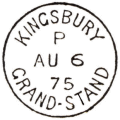
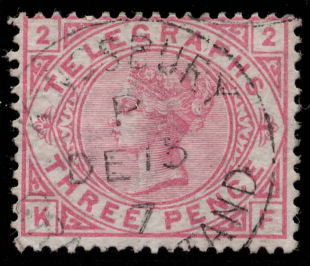
Kingsbury Grand-Stand:
Kingsbury only received one 24mm steel date stamp which was proofed on the 6th August 1875 and sent to Mr. Johnston at the Central Telegraph Office.
This has the format: KINGSBURY / GRAND-STAND.
Races at Kingsbury were halted in early 1878 so its usage is very rare as few telegrams would have been sent.
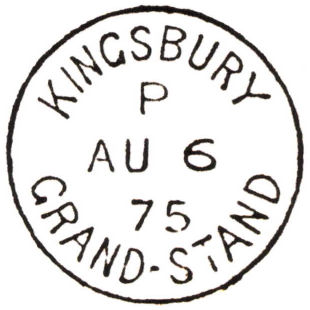 |
A Post Office Telegraph stamp used at the Kingsbury race meeting on
17 December 1877, possibly a unique survivor? |
 |
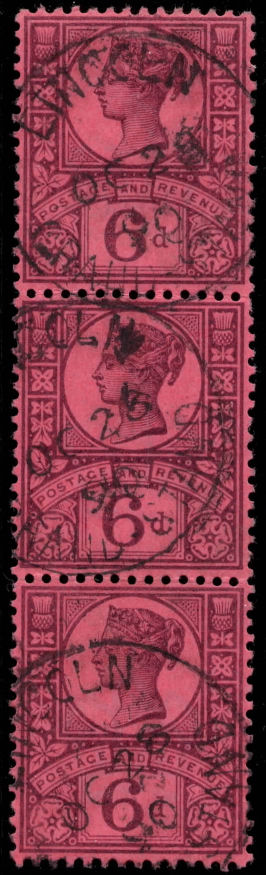
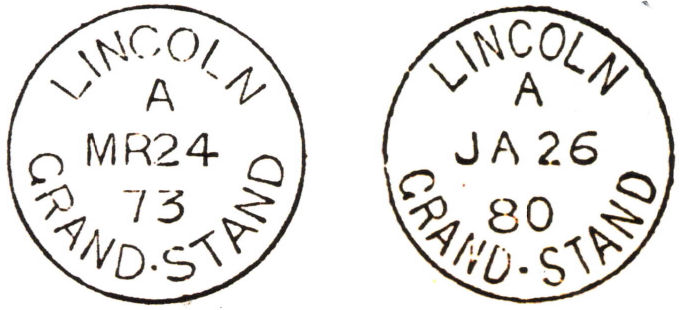
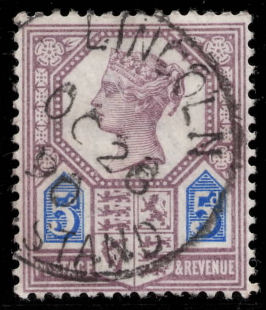
Lincoln Grand-Stand:
Lincoln received two steel date stamps im Victorian times. The first was proofed on the 24th March 1873.
This has the format: LINCOLN / GRAND-STAND and was sent to Mr. Johnston.
The second, of similar format, was proofed on the 26th January 1880 and was sent directly to Lincoln.
Interestingly the races had no permanent grand-stand until the early 1990’s. |
 |
 |
 |
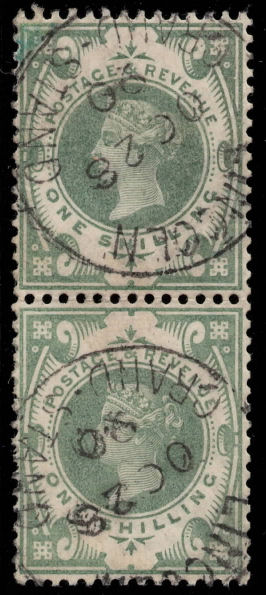 |
Examples used telegraphically on 28 October 1890 with the Lincoln grand-stand date stamp.
Lincoln held two large meetings a year and some 11451 telegrams were sent in 1875. |
Manchester Grand-Stand:
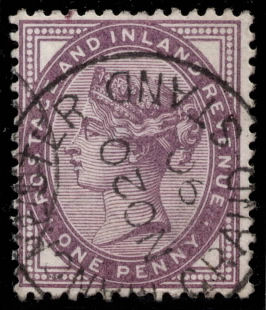
Manchester received three 23mm steel date stamps. The first was proofed on the 29th March 1873.
This has the format: MANCHESTER / GRAND-STAND. The second obliterator was proofed on the 6th December 1879 and the third on the 6th
November 1886.
The format is the same although the 1879 example uses a taller script and in both the latter ones, the dash between GRAND and STAND is little more than a dot.
All were sent directly to Manchester Telegraph Office. The races were
not that significant in the 19th century with the telegraphic business being in the order of about 5000 telegrams per year.
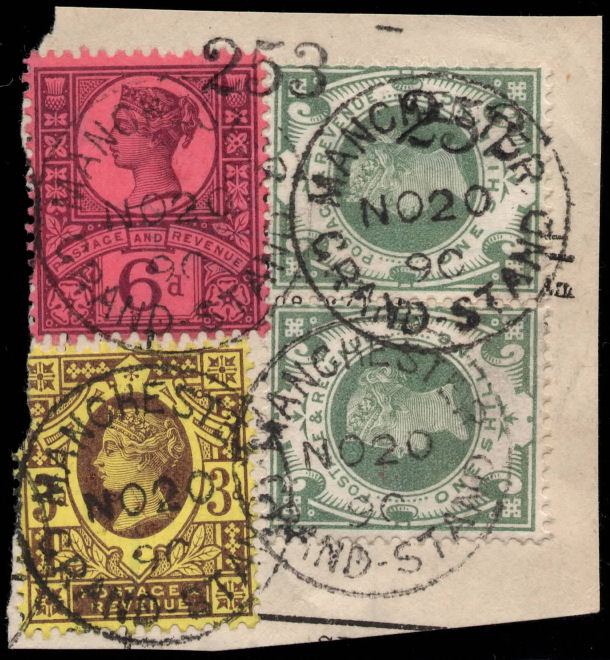
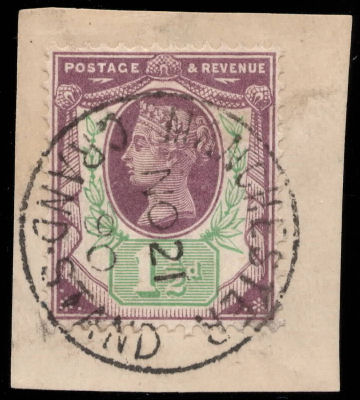
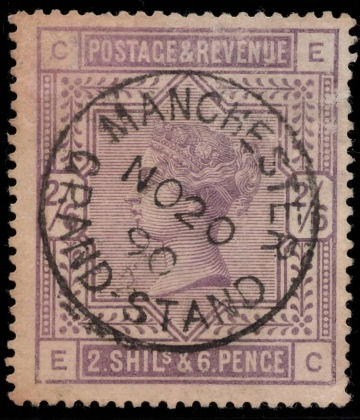
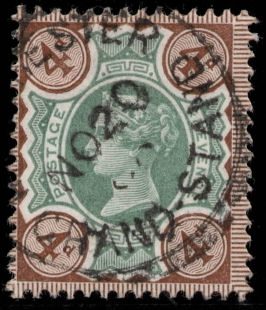
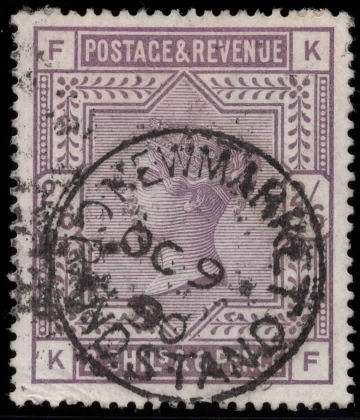
Examples used at the race meeting of 20/22 November 1890, with the Manchester grandstand date stamp for 20 November 1890.
That on the 1d, 4d and 2/6d 1s of the first issue. That on the 1½d is of the second issue.
Interestingly, this is on card and
not a part telegraph form, so this usage may not have been for telegraphic purposes but for postage at a separate desk. It would,also be an unusual value for a telegram.
The piece on part telegram form is of the first type and also includes an accounting
number 253 indicating this telegram was sent multiple times so probably represented a press telegram giving results.
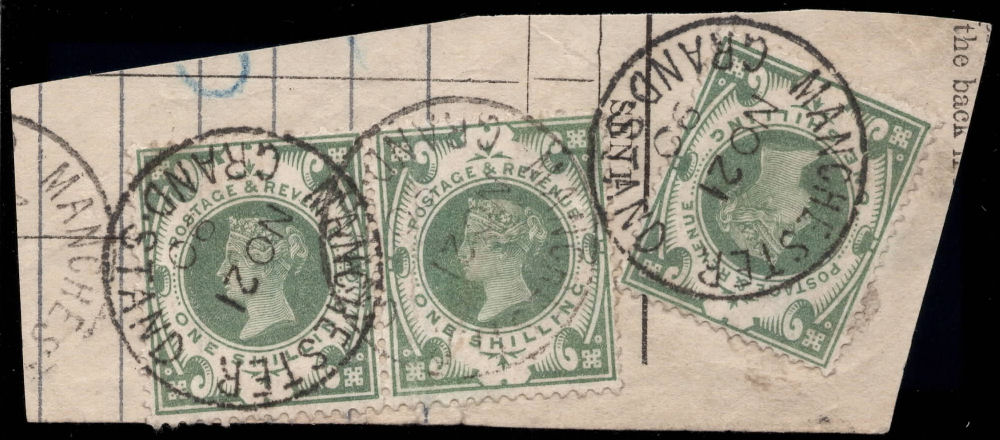
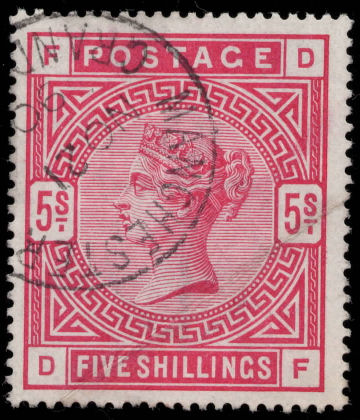
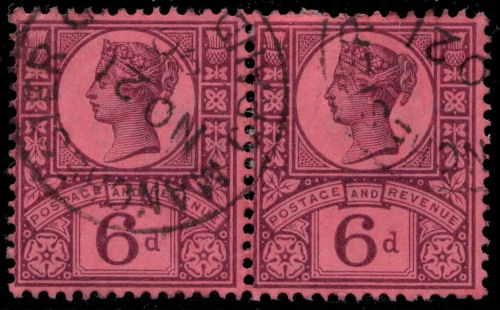
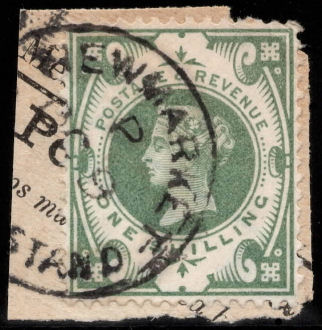
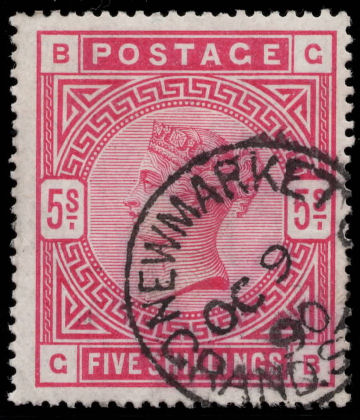
Examples from the same meeting but dated 21 November 1890. The 6d and 5/- are of the first type, the shillings on piece are of the second type.
 |
 |
 |
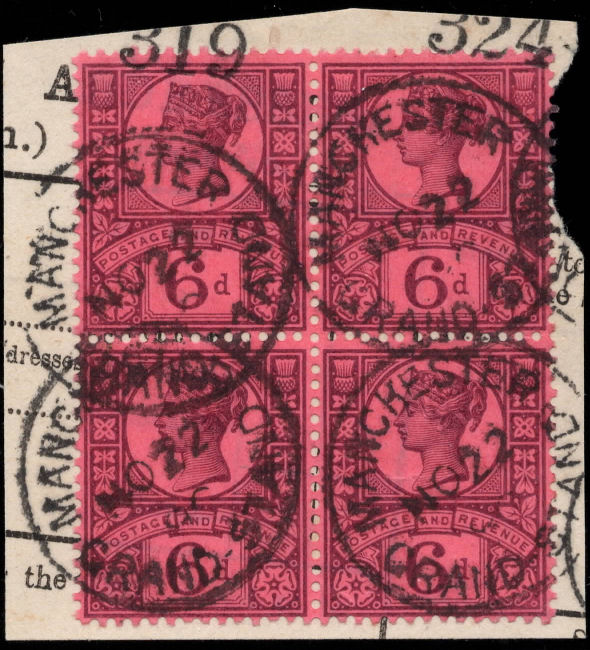
Examples from the final day of the meeting, dated 22 November 1890.
The piece Shows accounting numbers 319 and 324 showing it was sent
multiple times and is thus most likely a press results telegram.
The 1/- values are cancelled with the second issue of the date-stamp,
the others the first. Also, the 6d values show two different shades used
in the same place on the same day. |
 |
———————————————————————————————————————————————
 |
 |
 |
 |
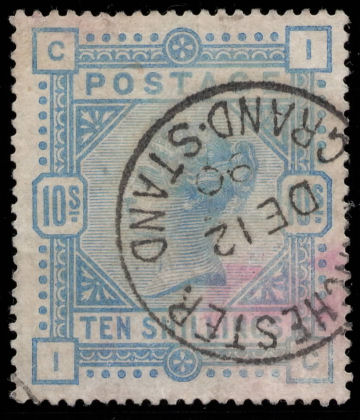 |
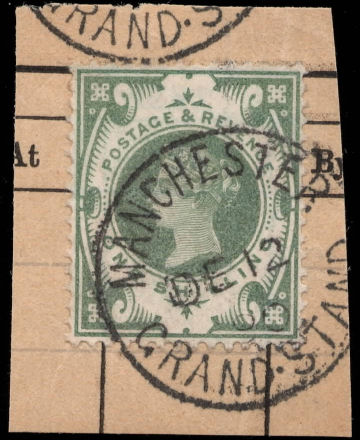
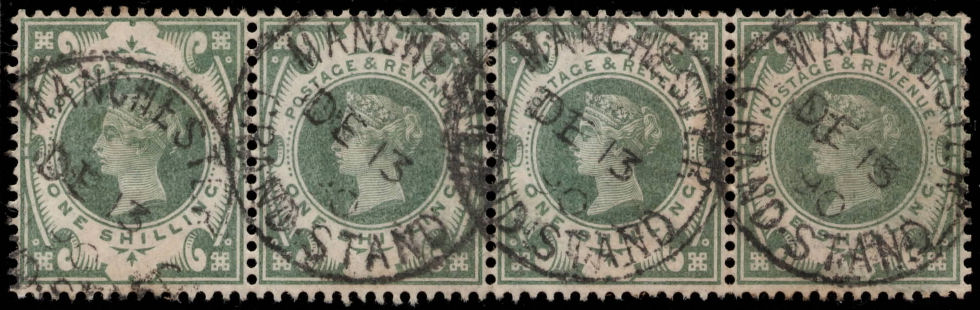
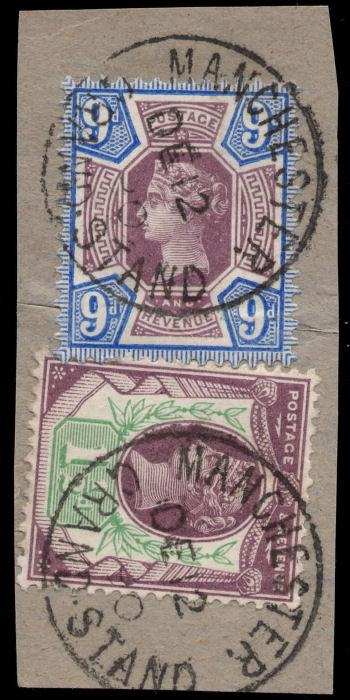
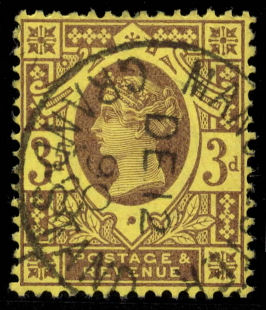
Examples used at the race meeting of 12/13 December 1890,
with the Manchester Grand-Stand date stamp,
all cancelled with the second issue type. |
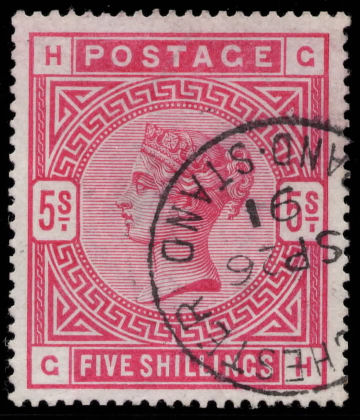 |
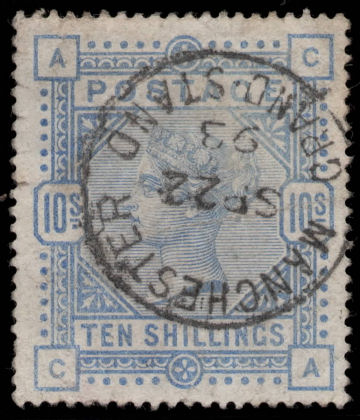
Examples used at the race meetings
of 26 September 1891 and 22 September 1893,
both with the third issue date stamp. |
 |
Munster Agricultural Society Show and Race Meeting:
There is no specific grand-stand date stamp for Munster, however, the presence of the Special Staff accounting number 348 on this 5/-, used with the 22mm Cork T.O telegraph office cancel,
in combination with the date of 10 August 1891 tells us this was used at the Munster Race Meeting temporary telegraph office.
Likewise, the examples on piece dated 13 September 1894 also correspond to the correct date for the same meeting of that year and the usage can therefore be presumed to be the same.

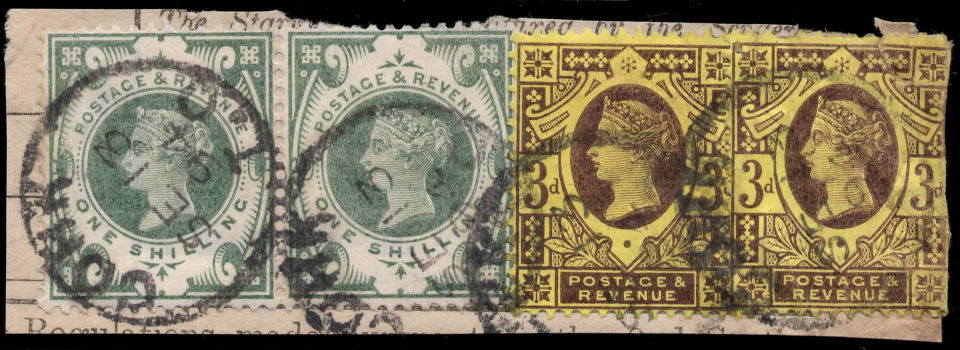
Mussleburgh Grand-Stand:
| Like Munster, no specific Grand-Stand cancel was issued, however this 1/- telegraph stamp bearing a Special Staff accounting mark, cancelled Edinburgh and dated 1 April 1881 indicates from the Post Office Circular of that month that it was used at the Mussleburgh race meeting of that date. |
|
 |
Newmarket Grand-Stand:
Newmarket received two steel date stamps in
Victorian times. The first was 22mm and proofed on the 7th April 1870.
This has the format. NEWMARKET / GRAND-STAND.
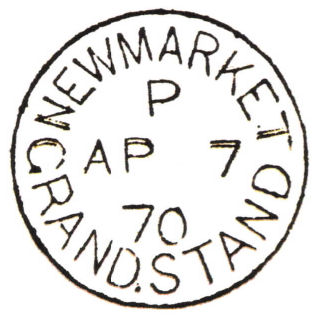


The above examples are all used at the race meetings of 25 April 1872, 25 September 1872 and 25 April 1878 with the first issue Newmarket Grand-Stand date stamp.
The second 23mm handstamp, of similar format but in a smaller script, was proofed on the 6th July 1871. Both were sent directly to Newmarket.
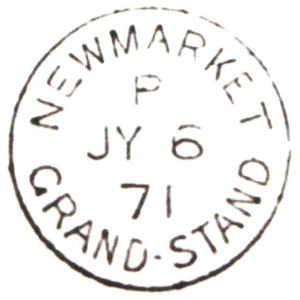
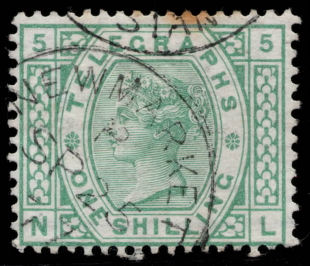
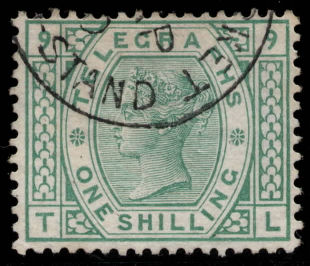
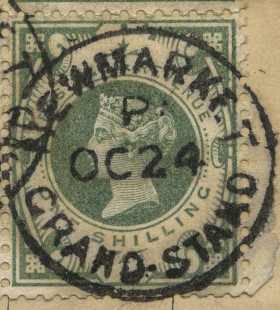
Examples used at the September 1877 and 1880 race meetings with the second issue Newmarket Grand-Stand date stamp. The business undertaken by the Special Staff at Newmarket was incredible.
Some 86,996 telegrams were sent across 6 race meetings in 1875, for a revenue in excess of £4000. This made Newmarket 20% of the Special Staff’s annual business.
Note: Date plugs were removable, the day could come first, like on the plate 9, and in 1890, many were missing the year.


 |
|
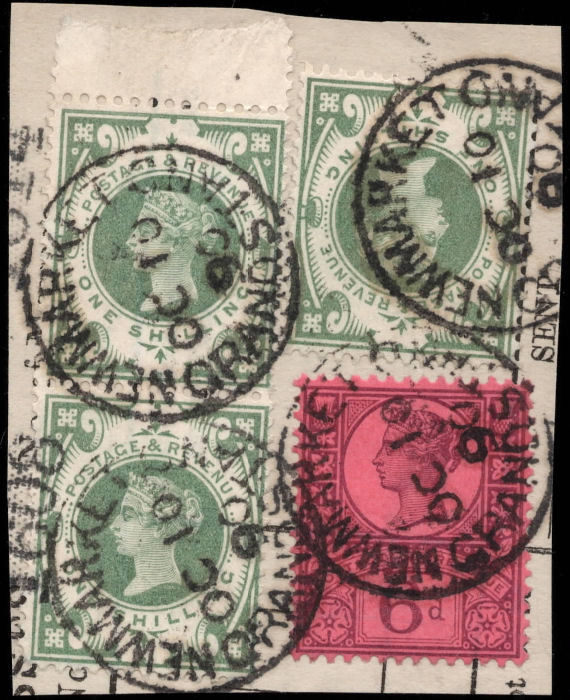
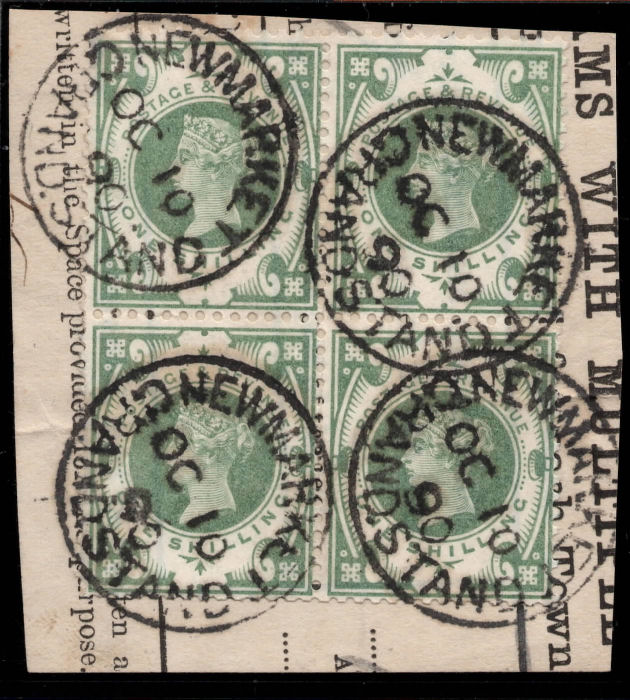
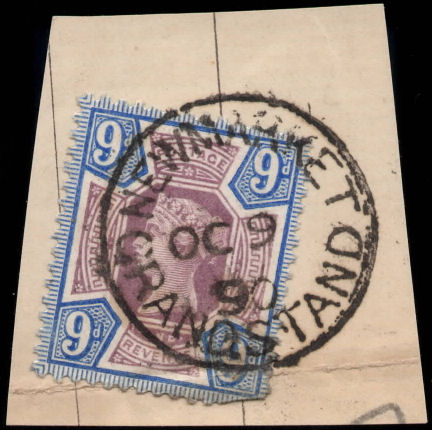
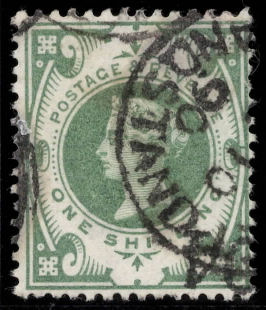
Examples used at the race meeting of 7/10 October 1890 with the Newmarket Grand-Stand first issue
date stamp for all four days. The piece on part telegram form to the left also includes accounting
numbers 1608 and 1614 indicating this telegram was sent multiple times so probably represented a
newspaper telegram giving race results. |
 |
 |
 |
|
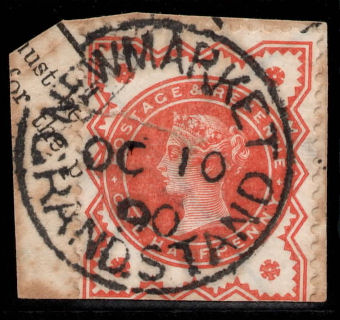
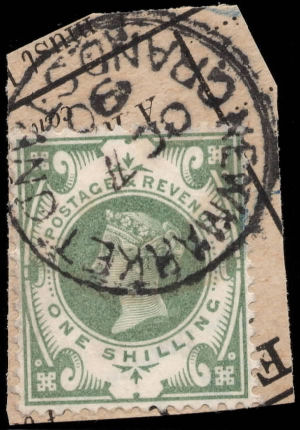
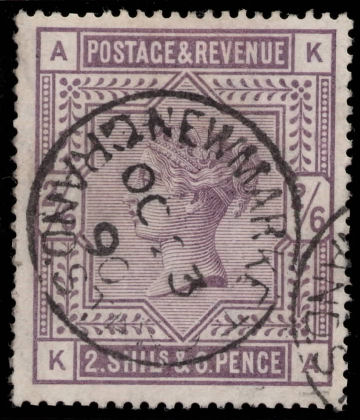
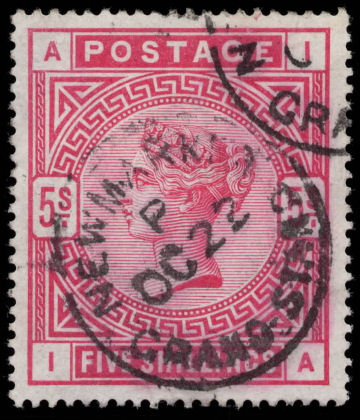
Examples used at the race meeting of 22/24 October 1890 with
the Newmarket Grand-Stand first issue date stamp for both days.
Newmarket was such a large meeting it not only had a
grand-stand telegraph office but also the
'Travelling Office’ was additionally in attendance.
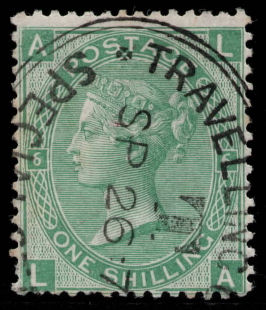
The oval Special Staff cancel on this 1/-, dated 26
September 1872, can be shown from the Post Office Circulars
to be from a meeting of that date at Newmarket. |
 |

 |
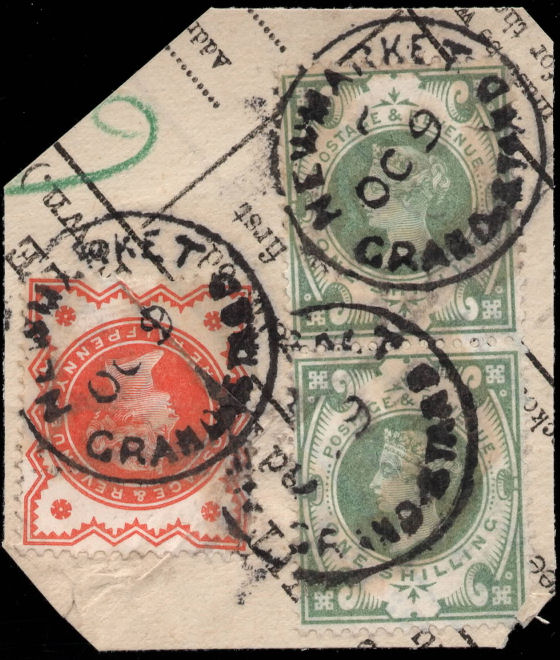 |
Examples used at the race meetings of 7/10 October and 22/24 October 1890?
with the Newmarket Grand-Stand second issue date stamp,
interestingly with no year slugs attached. |
Northampton Grand-Stand:
 |
|
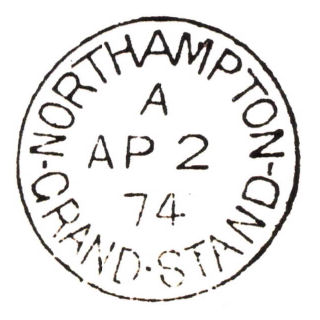
Northampton only received one 23mm steel date stamp which was
proofed on the 2nd April 1874 and sent directly to Northampton.
This has the format: NORTHAMPTON / GRAND-STAND.
This was still a busy race meeting with 4606 telegrams sent from
one meet in 1875.
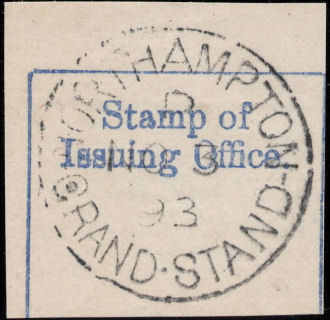
Telegraph form cancel cut-out for the meet of 3 November 1893
used with the Northampton Grand-Stand handstamp. |
|
 |
Nottingham Grand-Stand:
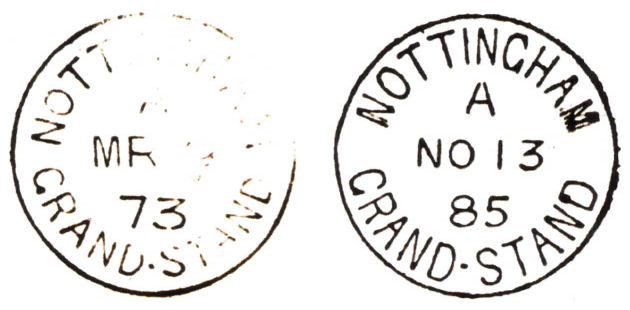
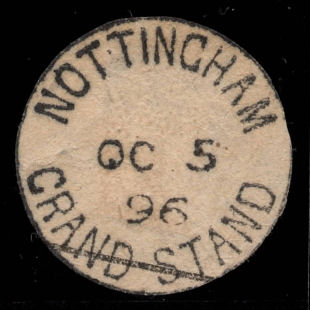
Nottingham received two 23mm steel date stamps, the first of which was proofed on the 19th March 1873 and sent to Mr. Johnston of the Special Staff.
This has the format: NOTTINGHAM / GRAND-STAND.
The second obliterator was proofed on the 13th November 1885 and is similar in format but can be distinguished due to the larger spacing between the G of Grand-Stand and N of Nottingham.
This latter example was sent directly to Nottingham.
 |
 |
|
Telegraph form cancel cut-out dated 5 October 1896 with the
second issue Nottingham date stamp. Some 4500 telegrams
were sent at two meetings in 1875.
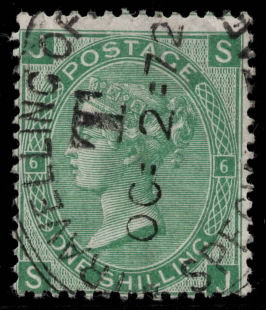
The oval Special Staff cancel on this 1/-, dated 2 October 1872,
can be shown from the Post Office Circulars to be from a meeting of that date at
Nottingham. |
|
 |
Plumpton Grand-Stand:
 |
|
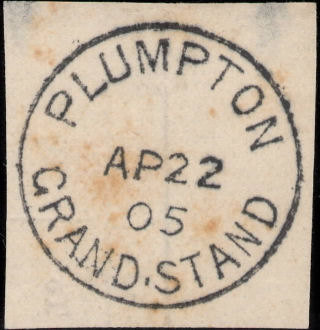
Plumpton received one 24mm steel date stamp,
which was proofed on the 1st November 1887 and sent to the Secretary, GPO!
This has the format: PLUMPTON / GRAND-STAND.
Telegraph form cancel cut-out for the meet of 22 April 1905 used with the Plumpton Grand-Stand handstamp. |
|
 |
Pontefract Grand-Stand:
 |
|
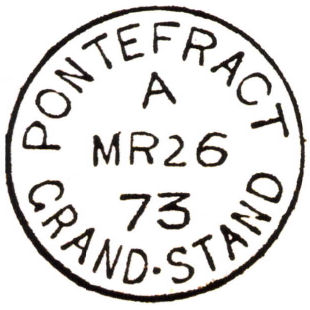
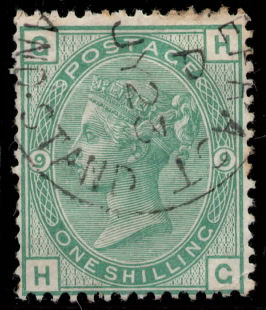
Pontefract only received one 24mm steel date stamp which was proofed
on the 26th March 1873 and sent to Mr. Johnston of the Special Staff. This has the format: PONTEFRACT / GRAND-STAND.
Example used at the Pontefract race meeting of 23 July 187?
(No date slug present but from the Plate 9 shilling usage, most likely 1875). |
|
 |
Salisbury Grand-Stand:
 |
|
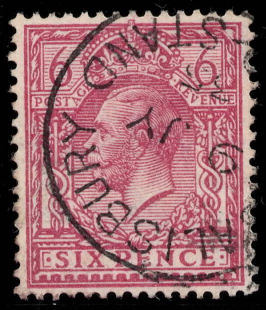
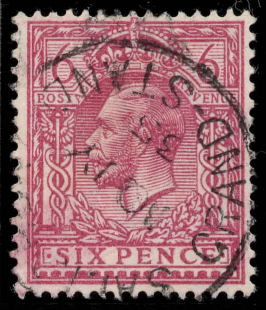
Salisbury received just one 24mm steel date stamp.
This was proofed on the 19th March 1873 and sent to Mr. Johnston
in the Central Telegraph Office.
This has the format: SALISBURY / GRAND-STAND.
Telegraphic use of postage stamps dated 9 and 10 July 1935
with the Salisbury Grand-Stand date stamp. |
|
 |
 |
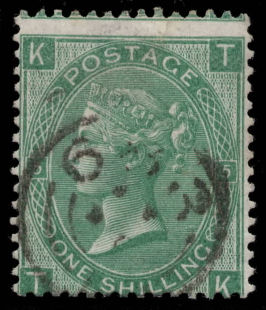
| Between 1870 and March 1873 the Special Staff were still present at race meetings in
Salisbury. During this period they would have needed a cancel for the temporary telegraph
office. The fact that the experimental 683 circular cancel had been given to Salisbury and
telegram rate stamps of this period exist with this cancel (and are unknown on cover)
suggests it most likely was used for this purpose.
|
|
 |
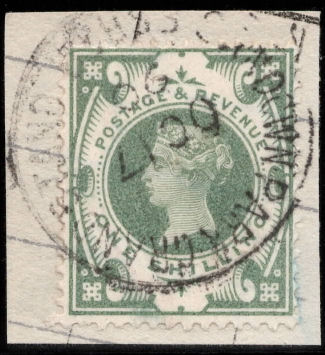
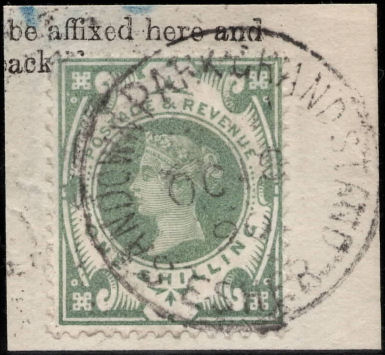
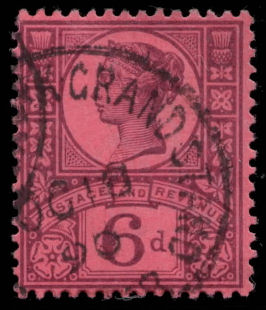
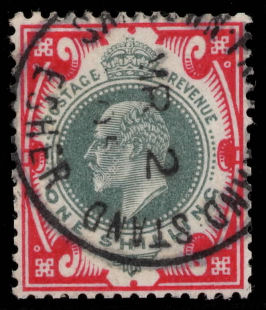
Sandown Park Grand-Stand:
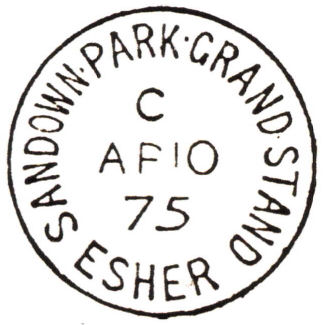
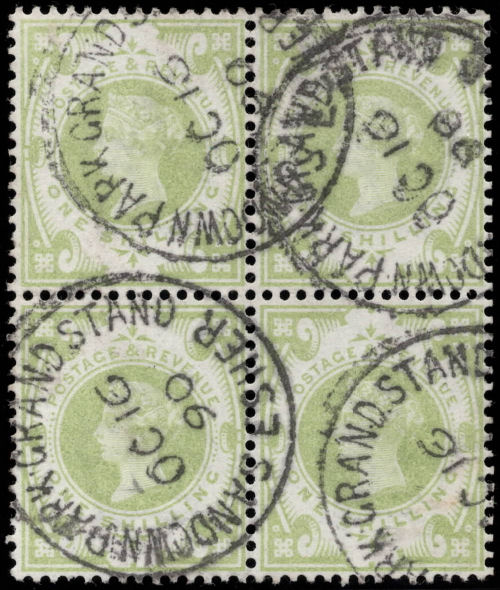
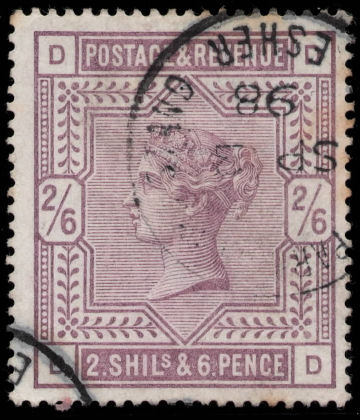
Sandown Park, Esher, received just one 25mm steel date stamp. This was proofed on the 10th April 1875 and sent to Mr. Johnston of the Special Staff.
This has the format: SANDOWN PARK GRAND STAND / ESHER.
 |
 |
 |
 |
 |
| |
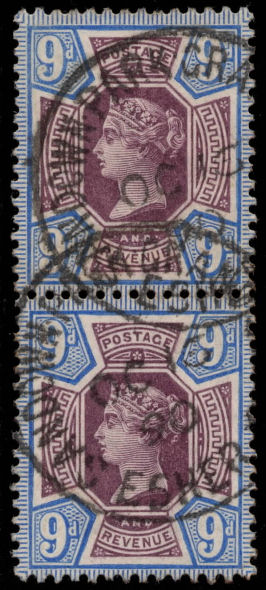
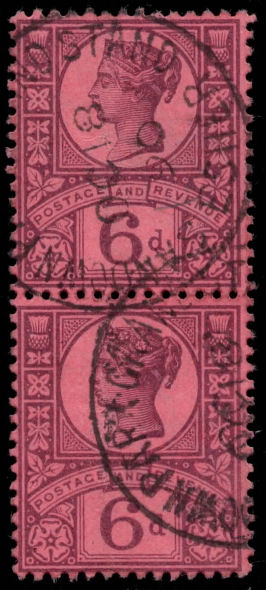
Examples used at the Sandown Park race meeting of 16/18 October 1890. |
 |
 |
 |
|
More examples from the Sandown Park race meeting of the 16/18 October 1890.
Despite just one meeting a year, 6339 telegrams were sent in 1875. |
| Example used at the Sandown Park race meeting of 8 September
1898 and one for 2 March 1901. This latter one 1s of an un-proofed later type with smaller script.
|
|
 |
 |
Stockbridge Grand-Stand:
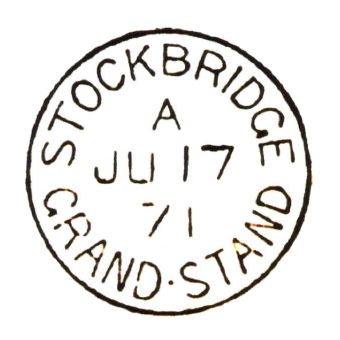
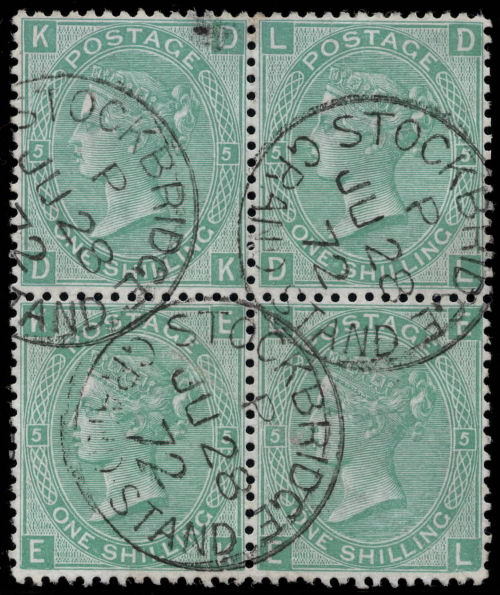
Stockbridge received one 23mm steel date stamp, which was proofed on the 17th July 1871 and sent directly to Stockbridge.
This has the format: STOCKBRIDGE / GRAND-STAND.
With just one meeting a year, 4512 telegrams were sent in 1875.
 |
 |
 |
 |
| |
Telegraphic use of postage stamps dated 28 July 1872 with
the Stockbridge Grand-Stand date stamp.
|
Stockton-on-Tees Grand-Stand:
 |
|
Stockton-on-Tees received one 23mm steel date stamp, which was proofed on the 14th March 1873 and sent to
the Central Telegraph Office Special Staff.
This has the format:
STOCKTON-ON-TEES / GRAND-STAND.
Telegraph form cancel cut-out for the meet of
3 January 1890 used with the Stockton-on-Tees
Grand-Stand handstamp. |
|
 |
Sutton Coldfield Grand-Stand:
 |
|
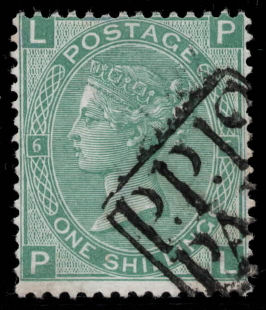
Sutton Coldfield received one steel date stamp. This was proofed on the 24th March 1875 and sent to Mr. Johnston of the Special Staff.
This has the format: SUTTON COLDFIELD / GRAND-STAND.
Between Feb 1870 and April 1873, Sutton Coldfield did not have a dedicated
handstamp yet there was a telegraph office present at race meetings.
The existence of many used examples of the PP12 Paid cancel on stamps of this
period, none ever found on cover, and formally issued to Sutton Coldfield
many years earlier, suggests this was the cancel used by the
Special Staff at the race meetings. |
|
 |
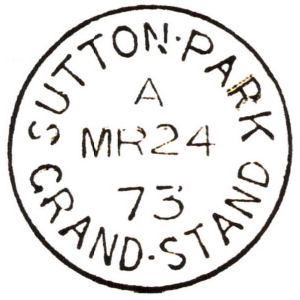
Sutton Park Grand-Stand:
 |
|
Sutton Park received just one 23mm steel date stamp. This was proofed on the 24th March 1873 and sent to Mr. Johnston of the Special Staff.
This has the format: SUTTON PARK / GRAND-STAND.
Example used at the Sutton Park race meeting of 1 September 1885. |
|
 |
Warwick Grand-Stand:
 |
|
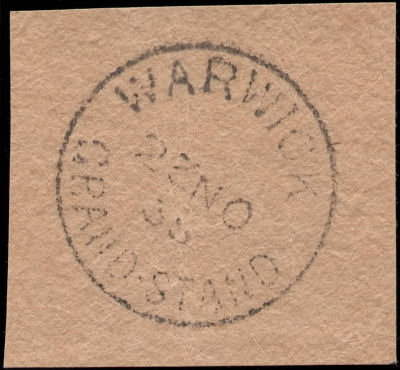
Warwick also received just one 24mm steel date stamp. This was proofed on the 24th September 1873 and sent to Mr. Johnston of the Special Staff.
This has the format: WARWICK / GRAND-STAND.
Telegraph form cut-out dated 23 November 1938 with the Warwick date stamp.
Warwick was a large meeting and one would expect the stamps to be more common than they are with 15900 telegrams having been sent across three meetings in 1875. |
|
 |
Windsor Grand-Stand:
 |
|
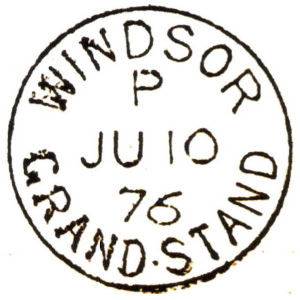
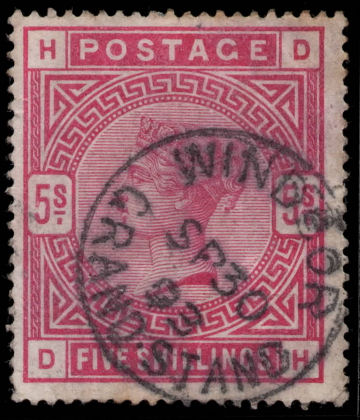
Windsor received one 23mm steel date stamp, which was proofed on the 10th June 1876 and sent to Mr. Johnson of the Special Staff.
This has the format: WINDSOR / GRAND-STAND.
With just one meeting a year, only 4512 telegrams were sent in 1875.
Example used at the Windsor race meeting of 30 September 1893. |
|
 |
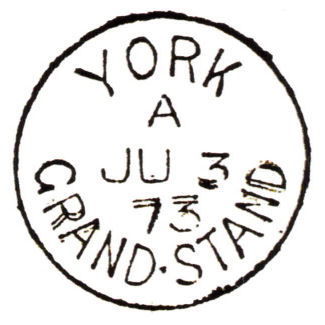
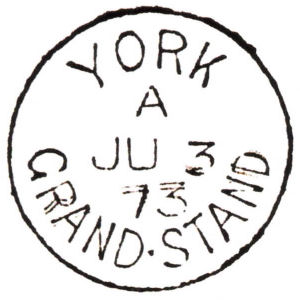
York Grand-Stand:
 |
|
York received one 23mm steel date stamp, which was proofed on
the 3rd June 1876 and sent to Mr. Johnson of the Special Staff.
This has the format: YORK / GRAND-STAND.
Example used at the York race meeting of 31 August 1914.
Obviously not telegraphic for a change and was possibly from a flight cover
or simply just a letter? |
|
 |
Other Proofed Grand-Stands:
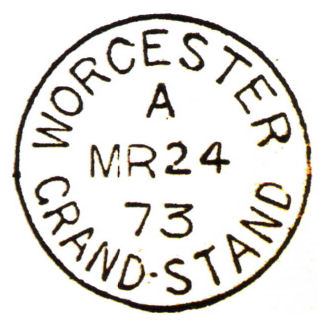
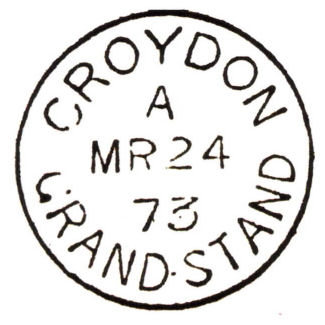
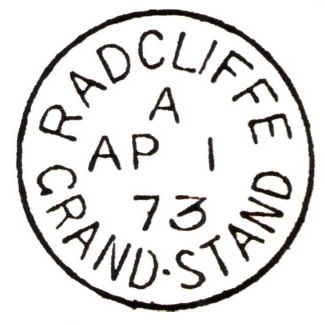
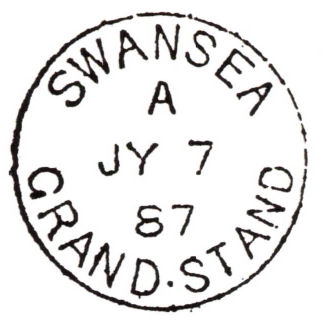
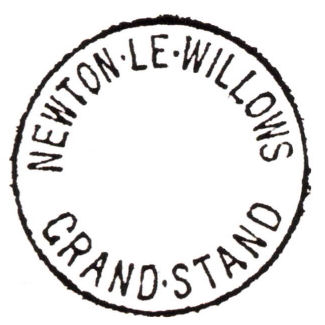
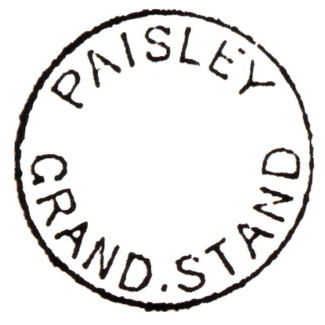
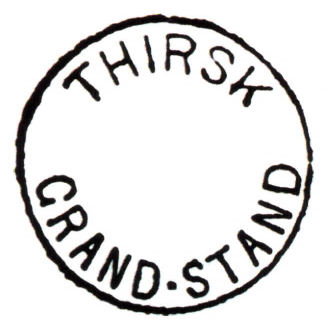
The following page illustrates the proofs of the other grand-stands that I am still looking for.
The list is quite long but it is likely, as many only had very few telegrams sent in a year (some in the 10’s!), that the majority no longer exist (I know of just 4 I don’t have).
Additionally, Keele grand-stand does exist but no proof is known!
They are all listed in the order in which they appear in the proof books.
The following proofs were conducted without date or year slugs but appear in the proof books for 1887.

These linear cancels were sent to Mr. Johnston of the Special Staff in early 1875.
Alternative Grand-Stands:
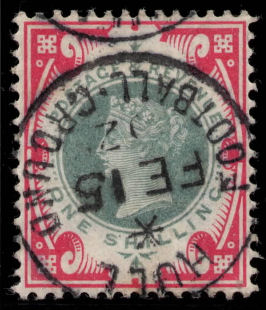
Hull Football Ground:
 |
|
An example of a grand-stand of a different type, this time not a race meeting
but a football ground. These were telegraph offices reporting match results
and are very rare with only Hull known during the Victorian period. It was
proofed on 4th February 1896. Only 3 examples have turned up and are all
used in Edwardian times. Example for hull football ground dated 15 February 1912. |
|
 |
Taunton Cricket Ground:
 |
|
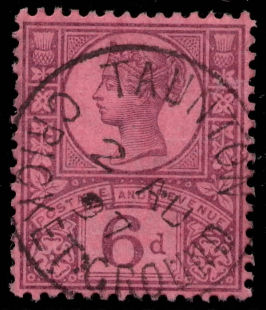
Once the holy grail of grand-stand cancels, cricket grounds regularly fetched
many thousand of pounds and were priced beyond the normal collector. They
are all rare and most are unknown. 15 grounds had proofed cancels from the
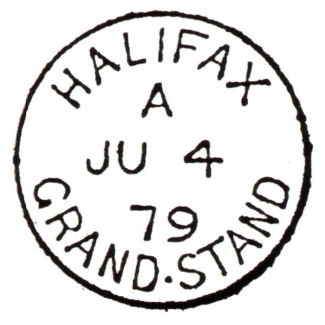
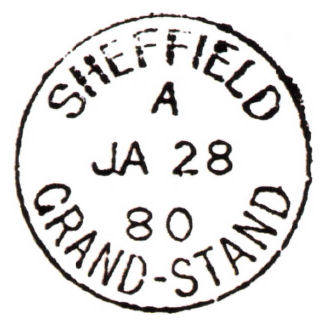
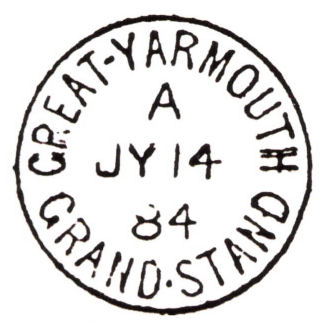
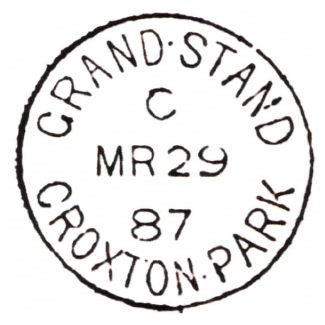
1880’s through to 1909, these include: Brighton, Bristol, Derby, Dover,
Halifax, Huddersfield, Hull, Leyton, Liverpool, Lords, Manchester,
Nottingham, Sheffield, Southampton and Taunton. The example here is for
Taunton and has the format TAUNTON / CRICKET GROUND. It was
proofed on 7th July 1891 and this one is dated 2 August 1897. |
|
 |
Other Special Staff events:
In the period 1870 to 1873 the special staff did not have access to many event specific cancels.
As such they had to rummage through local Post Office draws to find something suitable for their temporary locations.
This is the most likely source of a range of old and obsolete cancels being used in this period that have for a long time been identified as telegraphic.
With special staff usage in mind and knowledge of the original office of issue for the cancel it is quite easy to assign a likely event at which they
were used based on the PO Circulars.
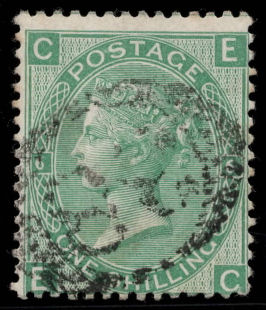
38 Barred Numeral
Kensington Exhibition 1871? |
|
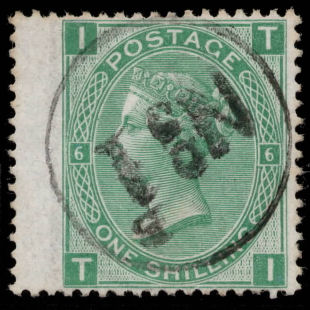
No1B
Unknown 1870-73 |
|
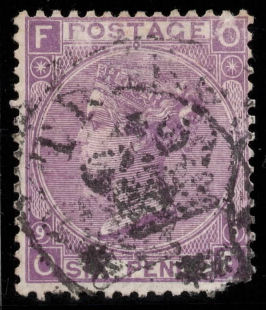
Truro Crown
Royal Cornwall Show Truro, 1871? |
The dates indicate that the Travelling Office cancel on the following two stamps was utilised by the Special Staff at two events:
the Smithfield Cattle Show on 11 December 1877 and the Oxford versus Cambridge cricket match at Lords on 24 June 1872.
Information/images about new types would be very welcome.
Comments, criticisms, information or suggestions are always welcome.

Please include the word 'Telegraphs' in the subject.
Last updated 4th. August 2026
©Copyright Steve Panting 2012/13/14/15/16/17/18/19/20/21/22/23/24/25/26 except where stated.
Permission is hereby granted to copy material for which the copyright is owned by myself, on condition that any data is not altered and this website is given credit.